
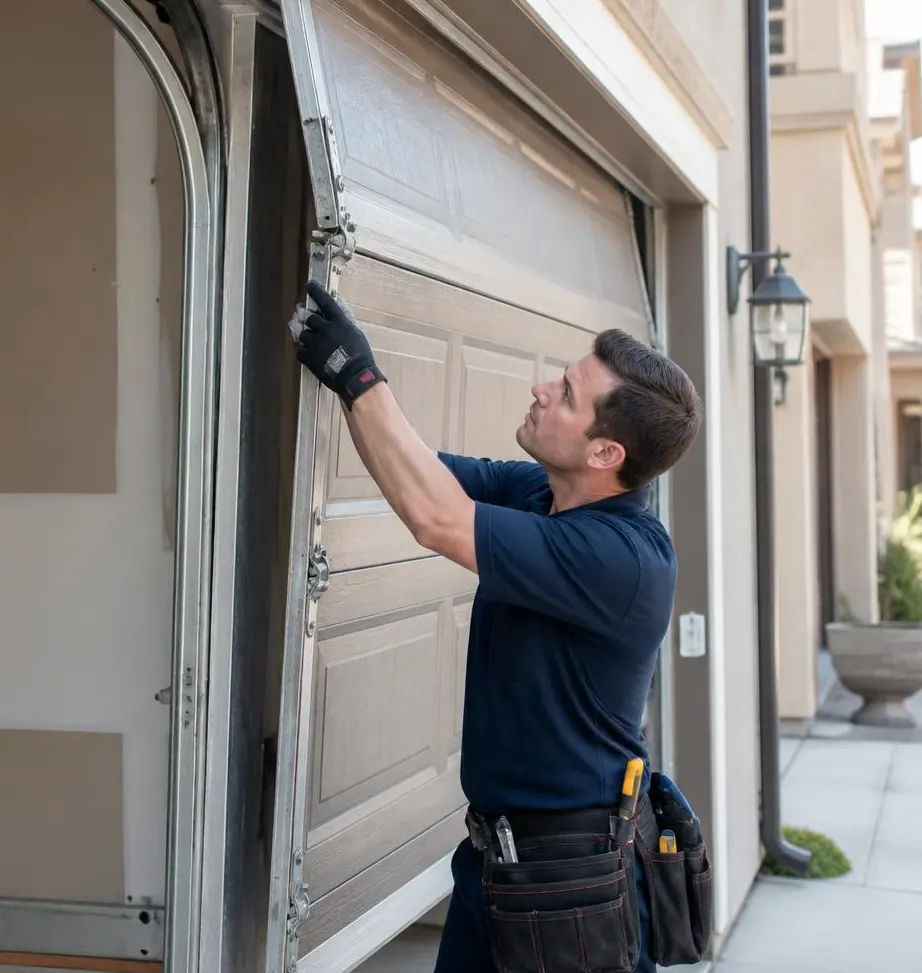
The Mistake Almost Everyone Makes First
Most homeowners start garage door maintenance by grabbing a can of WD-40 and spraying every moving part they can reach. It's tempting because it's fast, it feels productive, and the door usually does sound quieter right afterward. The problem is that WD-40 is a solvent and cleaner, not a lubricant. It strips away old grease, attracts dust and grit, and leaves hinges and rollers drier than before within a few weeks. By the time cold weather sets in and that thin lubricant film breaks down, you're left with the exact grinding and squealing you were trying to prevent — right when ice and freezing temperatures are already putting extra strain on the springs and opener.
A real once-a-season routine takes about twenty minutes, uses tools you likely already own, and does far more than spraying something on hinges. With Bucyrus headed into another winter of cold, salt, and ice, now is a good time to run through it.
Tools You'll Need
- Work gloves
- A flashlight
- A 2x4 scrap of wood or a full roll of paper towels
- A socket wrench or screwdriver set
- A soft cloth or rag
- Garage door lubricant (silicone-based or white lithium grease — not WD-40 or motor oil)
- A soft broom or shop vacuum
The 20-Minute Routine
1. Walk the Track and Visually Inspect
With the door closed, shine the flashlight along both vertical tracks. Look for rust, dents, gaps where the track has pulled away from the wall, or debris buildup. In this area, road salt tracked in on tires or boots can cause rust on the lower sections of track over a winter, so check the bottom few feet closely.
2. Tighten Visible Hardware
Using the socket wrench, check the bolts holding the track brackets to the wall and the hinges connecting the door panels. Garage doors flex every time they open and close, and that vibration works hardware loose over a season. Snug anything that's loose — but don't force anything that feels stripped or seized, and never touch the brackets holding the springs in place.
3. Test the Balance
Disconnect the opener by pulling the release cord (usually a red handle hanging from the trolley), then lift the door manually about halfway. A properly balanced door will stay in place on its own. If it drifts down or shoots upward, the springs are compensating incorrectly — that's a sign of spring wear, not something to adjust yourself.
4. Check the Auto-Reverse Safety Sensors
Close the door using the opener, then place the 2x4 or a paper towel roll in its path about two inches off the ground. The door should reverse immediately on contact. Separately, wave your hand in front of the photo-eye sensors near the floor while the door is closing — it should stop and reverse without touching anything. If either test fails, stop using the opener until it's fixed.
5. Clean and Lubricate
Wipe down the tracks with the cloth to remove dust, cobwebs, and grime — especially after a humid summer, when moisture can leave a sticky film that attracts dirt. Apply a few drops of garage door lubricant to the hinges, rollers (if they're metal, not nylon), and the torsion bar if accessible. Avoid spraying lubricant directly into the tracks themselves; the rollers need traction, not grease.
6. Inspect Weatherstripping
Run your hand along the rubber seal at the bottom of the door and the vinyl strips along the sides. Cracked, brittle, or torn weatherstripping lets cold air, moisture, and salt spray into the garage — a real issue once temperatures start dropping and ice becomes part of daily life. Replacing it is a simple DIY task if you catch it early.
7. Run a Full Cycle and Listen
Close out the routine by opening and closing the door once from outside and once from inside, watching and listening the whole time. Note any new grinding, scraping, or hesitation — even if the door completes the cycle fine. These small sounds are often the first warning sign of a bigger issue a few weeks out.
What's DIY and What Isn't
Everything above — visual inspection, tightening exposed hardware, lubrication, cleaning, weatherstripping, and testing sensors — is safe for a homeowner to handle. What's off-limits is anything involving the springs or cables. Torsion and extension springs hold enormous tension and have caused serious injuries when handled without the right tools and training. The same goes for adjusting opener force settings, replacing rollers that have cracked or chipped, or straightening a bent track. If your balance test or visual inspection turns up any of those issues, it's time to call in a technician rather than troubleshoot further.
When to Call Bucyrus Garage Door
If your balance test shows the door isn't holding its position, or you spot rust and wear on the springs during inspection, that's a job for our Spring Replacement service — springs are rated for a certain number of cycles and tend to fail without much warning, usually on the coldest mornings. If the sensors aren't reversing the door reliably, or the opener is straining, hesitating, or making new noises, our Garage Door Opener Repair & Installation team can diagnose whether it's a sensor alignment issue, a worn gear, or something electrical. Either way, we'll walk you through exactly what we find before any work starts.
If your twenty-minute check turns up something that doesn't look right, give Bucyrus Garage Door a call. We serve homeowners throughout Bucyrus, OH and the surrounding Crawford County area, and we'd rather help you catch a small problem now than have you stuck outside in January with a door that won't budge.